Sitting in the 37 signals presentation. They’re going to tell us about the lessons they’ve learned over 10 years being in business.
I’d guesstimate about 1000 - 3000+ people in the auditorium.
Here’s what they say …
- Don’t worry about the unknown:
Point here being, don’t worry about trying to build something that takes care of every single scenario. Do what works now and change later. Optimize for now
- Red Flags:
I didn’t know that half the 37 signals team was remote … apparently 5 of them are based out of Chicago and 5 are other places
They talk about the things we say that can be detrimental to the team … simplified
Only: It’ll only take a few hours right?
Can’t: We can’t launch without it
Need: We really need it.
Easy: Hey Sam can you take care of this by Friday … it should be easy right?
Fast: Can you take care of this real fast.
- Be successful and make money by helping others be successful and make money
- Target nonconsumers and nonconsumptions
A nonconsumer is someone who has a problem but the solutions for the problem basically suck.
This is an opening for you as an entrepreneur to go in and solve their problem.
The upside is that the entrenched players who suck at solving this problem won’t try to fight you on it, you fly under the radar … picking up loose change.
- Question your work regularly
Why are we doing this?
What problem are we solving?
Is this actually useful?
Is there an easier way?
- Fix your copy
The “internets” is inundated with crappy copy writing … that directly affects the way your user views your app.
Consider a rewrite of the site first, before a redesign.
- Err on the side of simple
Start with the easy way first. Use craigslist before Monster. Rewrite just that module, not the entire app.
The longer you sit on something, the less likely you are to launch it.
- Invest in what doesn’t change
What works today and will work ten years from now.
Google invests in speed and better search results. Amazon invests in fast shipping.
For 37 signals, its investing in simple software. What is it for you?
- Share
Share what you know. That way you become an expert and people come to you.
(I had a problem with this one … and think its only true to a certain extent)
- Minimize interruptions (they kill productivity)
Joel Spolsky has talked about this before in one of his posts. But being close to someone gives people the tendency to interrupt each other.
“Hey … check this out?”, “Lets have a quick meeting”
This wastes time and kills productivity … people need blocks of time to work through.
Think of more passive communication like IM or instituting “no-talk” blocks of time
- Roadmaps send you in the wrong direction
They lock you into a path.
“Its OK to think about the future, just don’t write it down”
- Be clear in crisis
People just want to know what is going on. So be open, honest, public and responsive.
- Make tiny decisions
Achievements build momentum. When you make small decisions, you can’t make big mistakes.
- Make it matter
Be passionate about what you do.
Respect your time … don’t waste it on stuff that doesn’t matter.
March 8th, 2008
I consider myself a power user of windows xp, so why haven’t I upgraded from winamp 5.35 to winamp 5.52?
After all, every single time I start winamp it bugs me to.
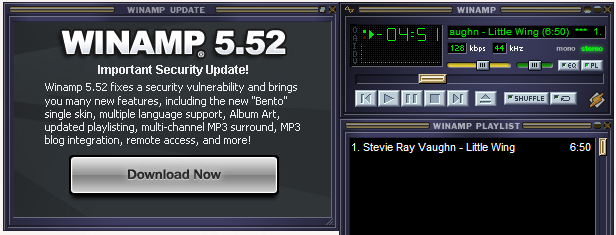
The answer is simple … Its because I’m lazy.
I’m not going to go to winamp.com, try to figure out which version to download and then actually install it over again, just so winamp runs exactly the same as it did before! No way.
But, if the program went out there got the update and installed it for me … I wouldn’t object.
Firefox does this right.
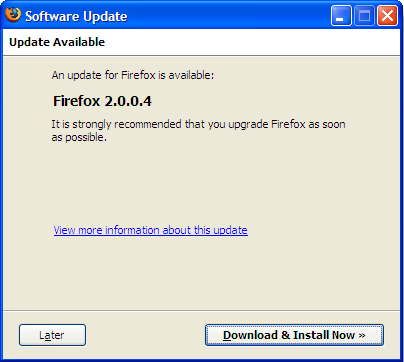
When an update is available, it goes out and finds it for me. If I okay it, it installs the update for me and restarts my browser, putting me back viewing the page I was looking at before … like nothing happened. All I have to do is hit “Download & Install Now”. How easy is that?
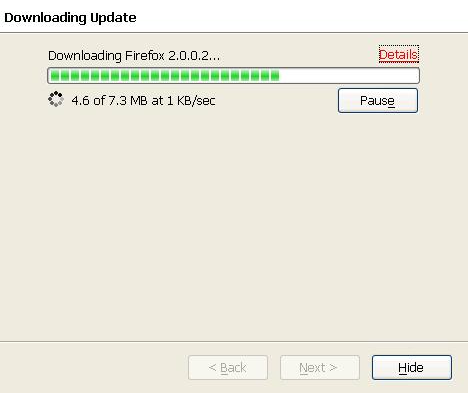
Nag screens/prompts/dialogs are very annoying. My natural instinct is to close them and get on with my life.
In that scenario, everybody loses.
So if you write software, you should strive to have it update automatically, if you possibly can. That would definitely be a selling point for me as your customer. (Hear that Blumenthals software?)
PS: Most software (including wordpress) does require you to go download and install the newest versions. Since automatically updating software is so rare it could be a killer feature if you incorporated it into your software.
February 7th, 2008
I spent a good two or three days searching for a good piece of project management software, a few months back. I finally settled with unfuddle. One week after signing up, I was reminded of why I had picked them.
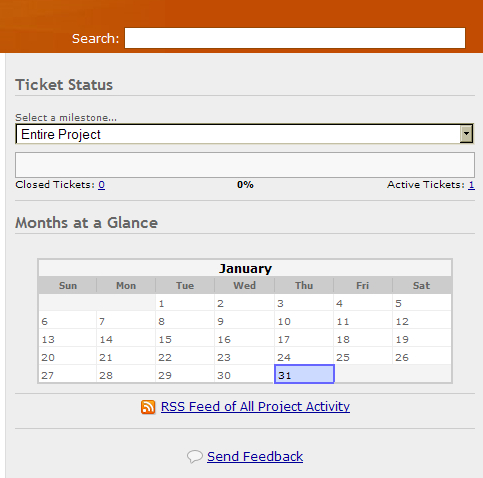
I had been working with on a project and suddenly remembered that I wanted to gripe to them about their user limits, so I went searching for a contact us link … my eyes immediately fell on the link that said “send feedback” … [click on image to see bigger copy]

as soon as I clicked on it, a contact form flew out that allowed me get on with my rant

why is this nifty?
- It was quick and easy: I just typed in what I wanted and went back to what I was doing … not a single page load
- It was easy: notice how they didn’t ask for my name or email? … they have that information already
- It gives you an out: If you click “cancel” the form goes away immediately and you can get back to what you were doing
any complaints?
- Just one the placement of the”send feedback” link might cause it to be overlooked. An understated graphic might help draw more attention to it
what happened afterward?
- I sent the email before I went to bed at 11pm, and before I had woken up, I had a response. Not a brush off by the way … a good detailed email that addressed all the issues raised. While I didn’t agree with their positions on certain things, I felt like they had listened to me, and now I’m writing this blog. CUSTOMER SERVICE IS MARKETING!
So if you want a great web application for project management … give unfuddle a look.
January 31st, 2008
I worked as a developer with a Search Engine Optimization firm for some time, where I learned that some shady companies are able to buy domain names that you search for online.
It wasn’t exactly clear to me how this was happening until I chanced across this excellent article on my new favorite blog
How firms steal domain names you research
If you’re too lazy to read the entire thing then here’s a brief summary of how to avoid losing a domain you just searched for.
- Avoid address bar guessing.
- Avoid search engines that don’t make a billion dollars a year in revenue.
- Avoid browser plug-ins that send data back to the Internet.
- Go directly to trusted registrars and whois companies.
PS: I am now up to 80 feeds in my RSS reader 
January 4th, 2008